CAD / PLM success stories

Promotion stories built around real engineering problems.

No fake enterprise logos. No inflated claims. These case studies present Tigient and Cadient as an engineering intelligence partner for CAD review, PLM workflows, revision traceability and design knowledge reuse.

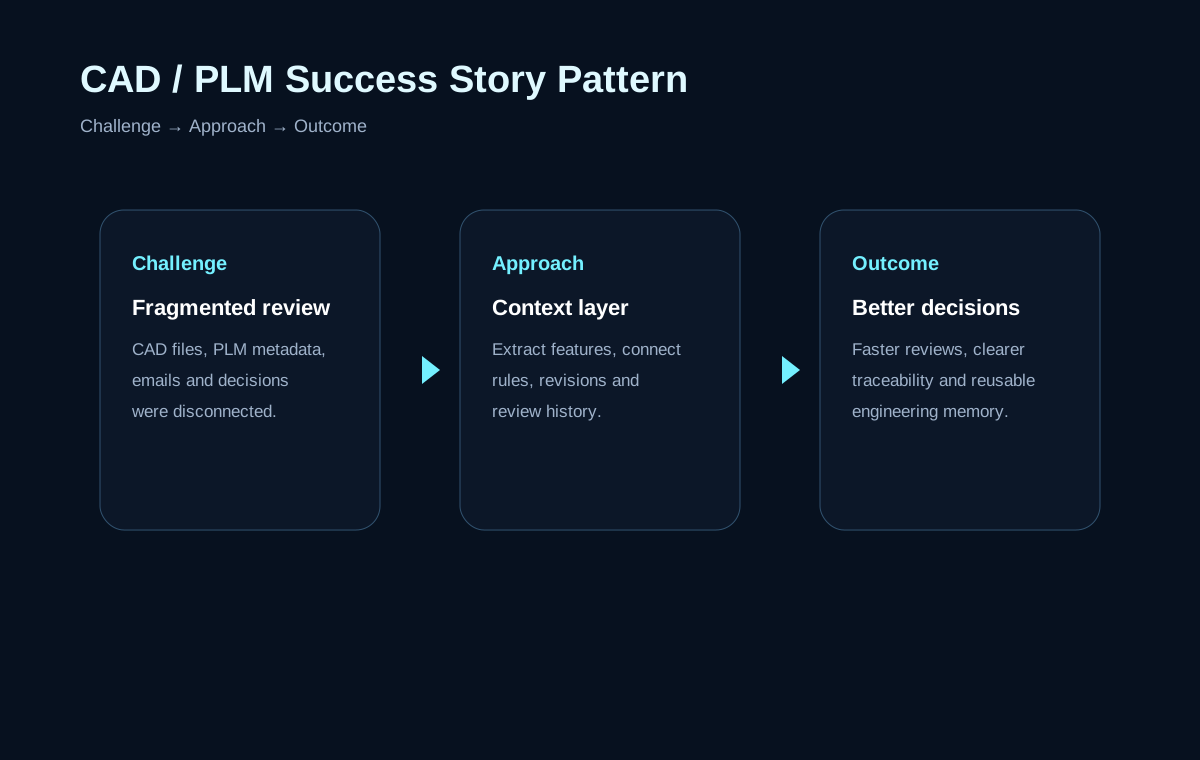
CAD PLM case study diagram
Inspired by industrial case-study patterns: describe the operational challenge, show the connected workflow, then focus on outcomes.
Detailed case studies

Use these as website pages, PDF one-pagers, LinkedIn posts or sales collateral.

Each story is framed as a capability-led case study, so it is credible for a startup while still sounding enterprise-ready.

Case Study 01 • CAD Review Automation

Accelerating Engineering Reviews

Engineering teams often spend significant effort reviewing drawings and 3D models against internal standards, ISO/GD&T expectations, manufacturability rules and previous design decisions. The issue is not only review time — it is the lack of consistent review context.

CAD reviewDesign rulesHuman approvalManufacturability
Challenge

Manual review created bottlenecks. Senior engineers had to repeatedly check similar issues such as hole distances, thickness choices, tolerance patterns, bend features and drawing completeness.

Approach

Cadient structures the model into an engineering context package, applies rule checks, highlights review risks directly in the viewer and generates AI-assisted recommendations for reviewer validation.

Outcome

Reviewers get a clearer starting point: what changed, which rules were triggered, why the issue matters and what correction could be considered before release.

Promotion line: Let engineers focus on design intent and critical decisions — not repetitive validation work.

Case Study 02 • CAD + PLM

Connecting CAD, PLM and Review Knowledge

CAD shows geometry. PLM shows metadata and lifecycle state. Review comments explain judgment. In many teams these stay disconnected, so engineers struggle to understand why a design was accepted, rejected or revised.

PLM integrationRevision historyDecision traceabilityEngineering memory
Challenge

Design context was spread across CAD files, PLM records, spreadsheets, email threads and review meetings. Teams repeated investigations because old decisions were hard to locate.

Approach

Tigient creates a connected engineering layer where model features, part metadata, review findings, approval decisions and revision notes become searchable and reusable.

Outcome

Teams gain better traceability across design release, supplier review, change requests and internal engineering discussions.

Promotion line: Every design review should strengthen the next one.

Case Study 03 • Engineering Knowledge Reuse

From Tribal Knowledge to Engineering Intelligence

Senior engineers carry years of practical judgment. But when knowledge lives only in people’s heads, companies repeat mistakes and lose decision quality when teams change.

Knowledge graphFeedback loopSimilar part searchReview learning
Challenge

Similar parts were reviewed differently by different people. Previous accepted corrections were not easy to reuse for new designs.

Approach

Cadient captures approval, rejection and reviewer feedback. Similar designs, triggered rules and accepted corrections are linked into an engineering knowledge graph.

Outcome

New reviews can start from company-specific engineering memory instead of generic AI output or manual search.

Promotion line: Turn every review into reusable engineering knowledge.

Case Study 04 • Revision Intelligence

Understanding What Changed and Why It Matters

Engineering revisions are not just file changes. A small geometry update can affect manufacturability, compliance, cost, suppliers and downstream assembly.

Diff viewChange impactApproval trailRoot cause
Challenge

Teams could see that a design changed, but not always what the change meant or whether similar changes had caused issues before.

Approach

Cadient links revision comparison with review rules, comments, decisions and AI recommendations so each change has context.

Outcome

Review conversations become faster because teams can focus on impact, not file comparison.

Promotion line: Revision history should explain engineering intent, not just store files.